
News
Adapted publications from vetted external sources with translation, attribution, and three-language localization.
267 news articles in the public feed
20 news items

Data & Statistics
1 min read
DSB_SPRPB01 - "Dataset: updated data"
Beneficiaries of disability pensions by pension type
Без рейтингу0 коментарів1 хв
Read article→
Science & Space
2 min read
NASA Hosts 2026 Review on Advanced Composite Manufacturing
2 min read Preparations for Next Moonwalk Simulations Underway (and Underwater) Boeing assembles a composite aircraft fuselage section in one of its production facilities. Composite materials are used in major portions of modern aircraft, including sections of the fuselage and wings on aircraft such as the Boeing 787. NASA’s HiCAM project aims to help accelerate manufacturing processes for future composite aircraft. Boeing NASA’s Hi-Rate Composite Aircraft Manufacturing (HiCAM) project brought together its full team of Advanced Composites Consortium partners for a 2026 spring review at NASA’s Langley Research Center in Hampton, Virginia. The meeting took place May 5-7, bringing together about 150 people from the consortium, a 22-member public-private partnership. The review gave NASA and industry partners a chance to look at recent progress and plan for the work ahead. NASA announced recent portfolio decisions, selecting technologies that can have the greatest impact on manufacturing rate for the next airplane program. During the meeting, teams reviewed the latest results from the project’s Development Phase and discussed early progress under Phase 2, known as the Demonstration Phase. This phase will scale up key manufacturing technologies in the coming years. A major part of the event included full-day workshops focused on assembly demonstrations of two large aircraft structures: the wing and fuselage. These sessions brought together NASA researchers, industry engineers, and partners to share updates, exchange ideas, and discuss long-term plans. Many teams said they noticed stronger collaboration and coordination across the group this year. That collaboration supports HiCAM’s goal of large-scale manufacturing demonstrations of a composite fuselage barrel and wing box in 2028 and 2029. These demonstrations represent major project milestones and will help show how advanced composite materials and processes could support faster, lower cost aircraft production. NASA and its partners continue to make steady progress toward the project’s goals. The project’s work could help pave the way for new manufacturing methods for lightweight composite structures that make future aircraft easier to build and more efficient to operate. Kimiko Booker NASA Langley Research Center Share Details Last Updated Jun 04, 2026 Related Terms Hi-Rate Composite Aircraft Manufacturing Langley Research Center Explore More 6 min read NASA’s X-59 Prepares for First Supersonic Flight Article 1 week ago 5 min read NASA Develops Sensor to Improve Firefighter Safety Article 1 week ago 4 min read NASA Announces Winners in University Aeronautics Competition Article 2 weeks ago
Без рейтингу0 коментарів2 хв
Read article→
Science & Space
7 min read
NASA-Funded Study Shows Wildfire Smoke’s Hidden Ozone Toll
Earth (ESD) Earth Explore Explore Earth Science Agriculture Air Quality Climate Change Freshwater Life on Earth Severe Storms Snow and Ice The Global Ocean Science at Work Earth Science at Work Technology and Innovation Powering Business Multimedia Image Collections Videos Data For Researchers About Us 5 Min Read NASA-Funded Study Shows Wildfire Smoke’s Hidden Ozone Toll Canadian wildfire smoke carried carbon monoxide — a building block of ground-level ozone — thousands of miles downwind in June 2023. Credits: NASA’s Goddard Space Flight Center Wildfire smoke is stoking a new challenge for cleaner air. A NASA-supported study published Thursday found that, over the last decade, wildfires have worsened ground-level ozone pollution across much of the contiguous United States, creating unhealthy air far from active flames. Wildfires have become an increasingly important contributor to ground-level ozone, or smog, across much of the United States, researchers report June 4 in the journal Science . Nationally, fires offset nearly four years’ worth of ozone-control gains, with larger setbacks in the West and Midwest. Smoke often is associated with the soot, ash, and other fine particles that make the air look hazy. But wildfires also emit gases such as carbon monoxide, which can help form surface ozone in sunlight when other pollutants are present. Surface ozone is an invisible pollutant harmful to human health, plants, and crops. As smoke plumes travel and mix with other pollution, those reactions can drive ozone increases hundreds or even thousands of miles from active fires. “NASA Earth observations, along with ground monitoring networks, help reveal air quality risks from wildfires that can cross state lines, giving air quality managers better decision-making information as wildfire smoke affects more communities,” said John Haynes, manager of NASA Earth Action’s Health and Air Quality program at the agency’s Headquarters in Washington. “This is a strong example of NASA science serving communities here in the U.S.” Building a clearer ozone picture High in the atmosphere, ozone shields Earth from harmful ultraviolet radiation . Near the ground, however, ozone can irritate lungs, worsen asthma and other respiratory diseases, and increase health risks for children, older adults, outdoor workers, and people with existing health conditions. To track surface ozone changes, researchers turned to deep learning, a form of artificial intelligence that finds patterns across large datasets. They used it to build a first-of-its-kind dataset estimating daily surface ozone from 2003 to 2024 on a kilometer-by-kilometer grid — about 0.6 miles on each side — across the contiguous U.S. The work received support from NASA’s Health and Air Quality program and other NASA grants. The scientists combined data from about 1,000 ground-based air quality stations with atmospheric model data, weather information, wildfire pollution data, and satellite-derived information, including products from the Visible Infrared Imaging Radiometer Suite ( VIIRS ) and the Moderate Resolution Imaging Spectroradiometer ( MODIS ) instruments. Smoke from Canada’s 2023 wildfires spread across North America. Tan to deep red colors show smoke intensity, estimated from black carbon in NASA’s GEOS-FP model. NASA’s Scientific Visualization Studio (SVS) and NASA’s Global Modeling Assimilation Office (GMAO) Their analysis revealed two distinct periods. From 2003 to 2015, U.S. ground-level ozone generally declined as emissions of ozone-forming pollutants decreased. After 2015, however, those gains slowed or reversed in many places. By comparing estimated ozone levels with scenarios that removed wildfire influence, the researchers found that pollution from wildfires was a main factor in that shift. Without the wildfire contribution, ground-level ozone in the Midwest, for example, would likely have continued to decline. Instead, wildfires erased about 5.3 years’ worth of ozone-control progress since 2015. “People in the Midwest may think fires burning far away will not affect them,” said the study’s corresponding author Jun Wang, an atmospheric scientist at the University of Iowa in Iowa City. “But once wildfire pollution is in the air, it can move across regions. Pollution from one place can affect air quality in another.” Measuring the health toll The study also found that wildfire-driven ozone increased exposure to unhealthy air and likely contributed to premature deaths. Premature deaths associated with long-term wildfire-related ozone exposure in the U.S. increased by an estimated 318 deaths per year after 2013, with the post-2013 average 46% higher than in the previous decade. The researchers calculated premature deaths using average lifespan, ozone exposure estimates, and population density. The 2023 Canadian wildfires showed how widely those risks can spread, with smoke-driven ozone increases stretching across the Midwest and into parts of the Northeast and South. Overall, from 2022 to 2024, wildfires exposed an additional 43 million people in the U.S. to conditions that did not meet current federal air quality standards for ozone, the researchers estimated. Capturing that national picture is difficult from ground monitors alone. Ground monitors remain the backbone of U.S. air quality tracking, but they do not cover every community. NASA’s scientifically validated satellite observations and models help researchers and agencies see air quality patterns across states, regions, and fire seasons. That broader air quality work includes newer missions such as TEMPO (Tropospheric Emissions: Monitoring of Pollution). Launched in 2023, TEMPO is NASA’s first mission to use a space-based spectrometer to provide hourly daytime measurements of air quality over North America. Its view is sharp enough to distinguish pollution patterns, including surface ozone, across areas only a few square miles wide, a major improvement over earlier satellites. Together, these capabilities help researchers and agencies see smoke-related ozone patterns that might otherwise be harder to detect, especially in rural and remote areas. The work also points toward a practical use of NASA science during fire season. Wang’s team has used NASA support to develop FireAQ, a decision-support system that brings satellite observations, model forecasts, and fire and aerosol products into weekly briefings with state and local air quality officials . The goal is to help officials see where smoke-related pollution may move next and give communities better information. Discover more about NASA’s air quality observations About the Author Emily DeMarco Writer/Editor (IV), Earth Science Division Share Details Last Updated Jun 04, 2026 Contact Emily DeMarco [email protected] Location Goddard Space Flight Center Related Terms Earth Air Quality Earth’s Atmosphere Goddard Space Flight Center Human Dimensions Wildfires Explore More 4 min read A Moonlit Earth as Seen From Artemis II An astronaut’s photo, taken en route to the Moon, reveals our planet and its place… Article 14 hours ago 2 min read Typhoon Jangmi The sprawling storm promised to deliver torrential rain across a wide swath of southern Japan. Article 2 days ago 3 min read Fire’s Footprint on Santa Rosa Island A wildland fire charred grassland, coastal sage scrub, and chaparral across one-third of the island,… Article 3 days ago Keep Exploring Discover More Topics From NASA Air Quality Air pollution is a significant threat to human health and our environment. Instruments on NASA satellites, along with airborne and… Wildfires Landsat satellites monitor wildfire extent, burn severity, and post-fire recovery since the 1970s, helping managers assess damage, improve safety, estimate… Earth Science at Work NASA Earth Science helps Americans respond to challenges and societal needs — such as wildland fires, hurricanes, and water supplies… NASA Knows: The Ozone Hole This is the story of the hole in Earth’s protective ozone layer: what it is, how it formed, and the…
Без рейтингу0 коментарів7 хв
Read article→
Science & Space
1 min read
Colorful, Chaotic Jupiter
NASA/JPL-Caltech/SwRI/MSSS; Image processing by Gary Eason © CC BY NASA’s Juno spacecraft captured this color-enhanced view of Jupiter’s northern hemisphere during its 61st close flyby of the giant planet on May 12, 2024. Citizen scientist Gary Eason made this image using raw data from the JunoCam instrument, applying digital processing techniques to enhance color and clarity. It provides a detailed view of chaotic clouds and cyclonic storms in an area known to scientists as a folded filamentary region. In these regions, the zonal jets that create the familiar banded patterns in Jupiter’s clouds break down, leading to turbulent patterns and cloud structures that rapidly evolve over the course of only a few days. Learn more about opportunities to do NASA science with citizen science projects. Image credit: NASA/JPL-Caltech/SwRI/MSSS; Image processing by Gary Eason © CC BY
Без рейтингу0 коментарів1 хв
Read article→
Quiz break
Tired of reading? Take the quiz of the day
Science & Space
6 min read
A Moonlit Earth as Seen From Artemis II
Earth Observatory Science Earth Observatory A Moonlit Earth as Seen From… Earth Earth Observatory Image of the Day EO Explorer Topics All Topics Atmosphere Land Heat & Radiation Life on Earth Human Dimensions Natural Events Oceans Remote Sensing Technology Snow & Ice Water More Content Collections Global Maps World of Change Articles Notes from the Field Blog Earth Matters Blog Blue Marble: Next Generation EO Kids Mission: Biomes About About Us Subscribe 🛜 RSS Contact Us Search April 2, 2026 One of the first images transmitted back to Earth from the Artemis II mission was a stunner. In a single image, Earth’s full disk appears amid celestial phenomena that illustrate its place in the solar system. And although the visible hemisphere appears to be awash in sunlight, it is actually lit by moonlight. The astronauts’ vantage point provided a rare opportunity to capture nighttime features—most notably lights from human habitation—from a new perspective. An Artemis crew member captured the photo from the Orion spacecraft after it completed the translunar injection burn , which sent the spacecraft out of Earth orbit and on a trajectory toward the Moon. In the photo, Earth eclipses the Sun from Orion’s perspective, leaving only a small sliver of its bright light visible around the bottom right edge. Green auroras, caused by charged particles from the Sun interacting with Earth’s upper atmosphere, glow around the north and south poles (lower left and upper right, respectively). The Sun’s light also produces the fuzzy glow, known as zodiacal light , that appears to the lower right of Earth. This phenomenon comes from sunlight reflecting off interplanetary dust. Skywatchers on Earth may see it at certain times of year around dawn or dusk as a faint column of light extending up from the horizon. Data collected by NASA’s Juno spacecraft on its journey to Jupiter suggest that Mars may be a significant source of the dust particles that produce zodiacal light. Earth’s other planetary neighbor, Venus, appears as the bright object in the bottom right of the image. April 2, 2026 On Earth itself, city lights are evidence of human activity. Bright areas appear in Spain, Portugal, and northern Africa (lower left), sub-Saharan Africa (center left), and Brazil (center right). Digital camera technology—with help from the illumination of a full Moon—made it possible to see these and other details of Earth’s surface and atmosphere in low light. The crew set the camera’s ISO to 51,200 to make it highly sensitive to light. For comparison, an ISO setting of 100 or 200 is common for daytime photography. Previous nighttime views of Earth taken from spacecraft may look very different from this photo but have also inspired and enlightened. For instance, the Apollo 12 crew photographed Earth eclipsing the Sun in 1969; astronaut Alan Bean would go on to depict his impressions of the event in paintings . More recently, astronauts aboard the International Space Station have photographed the planet at night from low Earth orbit, while NASA’s Black Marble nighttime lights product suite uses satellite observations to produce science-quality records of nighttime lights at daily, monthly, and yearly time scales. Those programs provide sustained data records, while the Artemis II photo is distinctive as a single human-captured full-disk view showing many low-light features at once. Cindy Evans , senior exploration scientist in the Astromaterials Research and Exploration Science Division at NASA’s Johnson Space Center, was working in the Science Evaluation Room during the Artemis II mission and was one of the first people on Earth to see the image. Evans was struck both by its beauty and the perspective revealed by all the visible solar system features. “I love the image so much because it was taken with Earth in moonshine, and shows Earth as a solar system body, a dynamic planet interacting with the solar wind, and a place harboring life,” she said. The image is scientifically valuable, as well, said Miguel Román , Deputy Director for Atmospheres and Data Systems at NASA’s Goddard Space Flight Center. “It speaks powerfully to the breadth of what NASA does across science and human exploration,” he said. Román studies artificial light at night, as viewed from space, as a measurable signal of human activity. “[This photo] reminds us that Earth at night is visually compelling, physically complex, and scientifically underexplored,” Román said. “I see this image as a glimpse of what Earth science can become in the future.” NASA images prepared for Earth Observatory by Lauren Dauphin. Story by Lindsey Doermann. References & Resources NASA (2026, April 22) Advancing Earth Observation at NASA Since Release of Earthrise Photo . Accessed June 2, 2026. NASA (2026, April 3) Hello, World . Accessed June 2, 2026. NASA (2006, October 9) Astronaut Still Photography During Apollo . Accessed June 2, 2026. NASA Earth Observatory (2026, May 15) Picturing Earth in a New Light . Accessed June 2, 2026. NASA Image and Video Library (2026, April 3) Earth From the Perspective of Artemis II . Accessed June 2, 2026. You may also be interested in: Stay up-to-date with the latest content from NASA as we explore the universe and discover more about our home planet. Great Balls of Fire 4 min read An astronaut on the International Space Station was surprised to photograph a shower of light streaking through the darkness while… Article Earthset From the Lunar Far Side 2 min read The crew of NASA’s Artemis II mission captured extraordinary images of our home planet during their journey around the far… Article Shades of a Lunar Eclipse 3 min read A series of nighttime satellite images revealed how moonlight reaching Earth varied throughout a total lunar eclipse. Article 1 2 3 4 Next Keep Exploring Discover More from NASA Earth Science Subscribe to Earth Observatory Newsletters Subscribe to the Earth Observatory and get the Earth in your inbox. Earth Observatory Image of the Day NASA’s Earth Observatory brings you the Earth, every day, with in-depth stories and stunning imagery. Explore Earth Science Earth Science Data Open access to NASA’s archive of Earth science data
Без рейтингу0 коментарів6 хв
Read article→
Data & Statistics
1 min read
DEMO_MINF - "Dataset: updated data"
Infant mortality
Без рейтингу0 коментарів1 хв
Read article→
Data & Statistics
1 min read
DEMO_MFOET - "Dataset: updated data"
Late foetal deaths by mother's age
Без рейтингу0 коментарів1 хв
Read article→
European Union
1 min read
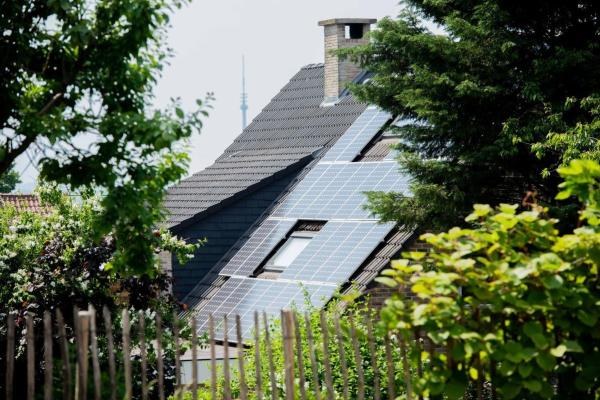
Improving energy efficiency of buildings to reduce bills and save energy
New rules to improve the energy performance of buildings across the EU come into effect on 30 May 2026.
Без рейтингу0 коментарів1 хв
Read article→
Test yourself
Think you know the answer? Take a quick test
Science & Space
7 min read
Curiosity Blog, Sols 4908-4912: Goodbye Campo Marte, It’s Been Fun!
Curiosity Navigation Curiosity Home Mission Overview Where is Curiosity? Mission Updates Science Overview Instruments Highlights Exploration Goals News and Features Multimedia Curiosity Raw Images Images Videos Audio Mosaics More Resources Mars Missions Mars Perseverance Rover Mars Curiosity Rover MAVEN Mars Reconnaissance Orbiter Mars Odyssey More Mars Missions Mars Home 5 min read Curiosity Blog, Sols 4908-4912: Goodbye Campo Marte, It’s Been Fun! NASA’s Mars rover Curiosity acquired this image of the inlet on its Chemistry & Mineralogy X-Ray Diffraction instrument (CheMin), which is about the size of a laptop computer and sits inside rover’s body, where it analyzes the chemical composition of rocks and soil. Curiosity captured the image using its Mars Hand Lens Imager (MAHLI), a close-up camera located on the turret at the end of the rover’s robotic arm, on May 28, 2026 — Sol 4908, or Martian day 4,908 of the Mars Science Laboratory Mission — at 11:14:14 UTC. NASA/JPL-Caltech/MSSS By Susanne P. Schwenzer, Professor of Planetary Mineralogy at The Open University, UK Earth planning date: Friday, May 29, 2026 Drilling always keeps the rover in place for a little while, and our 47th successful drill, “Campo Marte,” was no exception. The team used the time wisely and on top of the drilling, we also have many observations. Thinking for a long time about a workspace always gets me attached to the area — some more than others; at the shorter stops, especially — when I am on shift several times during this time. I was Science Operations Working Group chair three times while we were here, so it’s a real “Goodbye” for me today as we are driving onward to reach the next area up the hill on Mount Sharp. The Campo Marte drill was successful, as my colleague Abigail Fraeman reported last week . This week was spent investigating the aftermath of the drilling, which means running the CheMin instrument to get mineralogical data and the SAM instrument to inspect the volatile releases. ChemCam, APXS, MAHLI and Mastcam were also busy documenting the drill hole and the drill fines, as well as how much sample there was available overall. Of course, Curiosity also had a very good look at the other interesting targets in the area! Besides all the work on the drill hole, ChemCam carried out an expert’s targeting exercise by setting two targets up to aim at two different layers on adjacent spots on the finely laminated sediments. That involves aiming at millimeter-sized targets, named “Corcovado” and “Junakas,” respectively, about 3 meters away (about 10 feet)! We are curious if the layers are chemically different, which would tell us about different formation conditions, or if they are similar and the conditions when those layers formed were more similar. ChemCam is also looking at the target “Palcaya” to get more data on the chemistry of the layered bedrock, and will investigate the target “Alcamachi,” which is a float rock that looks intriguingly dark. Maybe that tells us it’s got a different chemistry? We will find out when we get the data! In addition to the chemistry measurements, ChemCam will also carry out a spectral investigation on the target “Magallanas,” which was a little too far away to also point the laser at it, but is intriguingly dark. This last week, ChemCam also planned three long-distance RMIs to document the sedimentary structures — younger and older ones — in the surrounding area. One of them drew the suspicion that it might break a record: it might be the longest strip of RMI images we have taken in one mosaic! The jury is out, it’s 24 frames and this way links up with an earlier, shorter set of images. The reason the mosaic is so long is because it images a small ridge with sedimentary textures that could tell us about the depositional conditions when the rock layers formed. But how cool is that — at 13+ years to still break our own records? Since our arrival, Mastcam has been very busy getting the entire region around us imaged. In addition, some higher-resolution mosaics have been taken, most notably one of the locations where the remaining sample was dropped, and then of the workspace to see again how much sample might — or might not — have been left in the drill stem and fallen out when Curiosity did the motions that are designed to shake any remaining sample out of the drill, to leave it prepared for the next time. Another imaging task, but for MAHLI, is to always image the sample inlets, also, to see if they are clean and prepared for the next sample. I included the MAHLI image of the CheMin inlet — don’t worry about the little rock, it’s with us for a while, and the CheMin team now calls it “our pet rock.” APXS joined the drill-hole investigations and has been focused on it even more than usual. The team decided that this is a very good opportunity to increase counting statistics beyond the usual and well-tested levels by significantly increasing the measurement time. To achieve that, it measured the Campo Marte drill fines in all plans of this week. And on the last night of that, MAHLI gets out its LED lights to finish the experiment with a sparkling nighttime MAHLI experiment to document it all. Our environmental team has kept the rover busy by looking at atmospheric opacity, dust activity, dust-devil activity and, of course, also monitoring the environment in general. With all this finished, the rover will continue its way up the hill to the next interesting area. I heard something like “cross-bedding” during the discussions, but as a mineralogist, I just note that that decision was taken by people who know more about sediments than I do, while I am itching to see the CheMin mineralogy results! Want to read more posts from the Curiosity team? Visit Mission Updates Want to learn more about Curiosity’s science instruments? Visit the Science Instruments page NASA’s Curiosity rover at the base of Mount Sharp NASA/JPL-Caltech/MSSS Share Details Last Updated Jun 03, 2026 Related Terms Blogs Explore More 3 min read Curiosity Blog, Sols 4900-4907: Pasadena, We Have a Drill Sample! Article 6 days ago 3 min read Curiosity Blog, Sols 4893-4899: Drilling at Campo Marte and a Visit From the Psyche Spacecraft Article 2 weeks ago 3 min read Curiosity Blog, Sols 4886-4892: Ingenuity and Perseverance, Curiosity Style Article 3 weeks ago Keep Exploring Discover More Topics From NASA Mars Mars is the fourth planet from the Sun, and the seventh largest. It’s the only planet we know of inhabited… All Mars Resources Explore this collection of Mars images, videos, resources, PDFs, and toolkits. Discover valuable content designed to inform, educate, and inspire,… Rover Basics Each robotic explorer sent to the Red Planet has its own unique capabilities driven by science. Many attributes of a… Mars Exploration: Science Goals The key to understanding the past, present or future potential for life on Mars can be found in NASA’s four…
Без рейтингу0 коментарів7 хв
Read article→
Data & Statistics
1 min read
TEINA030 - "Dataset: updated structure and data"
Government final consumption expenditure, current prices
Без рейтингу0 коментарів1 хв
Read article→
Data & Statistics
1 min read
TEINA021 - "Dataset: updated structure and data"
Final consumption expenditure of households and NPISH, volumes
Без рейтингу0 коментарів1 хв
Read article→
Data & Statistics
1 min read
TEINA020 - "Dataset: updated structure and data"
Final consumption expenditure of households and NPISH, current prices
Без рейтингу0 коментарів1 хв
Read article→
Challenge
Challenge yourself — a test in just 2 minutes
Data & Statistics
1 min read
TEINA011 - "Dataset: updated structure and data"
Gross domestic product, volumes
Без рейтингу0 коментарів1 хв
Read article→
Data & Statistics
1 min read
TEINA010 - "Dataset: updated structure and data"
Gross domestic product, current prices
Без рейтингу0 коментарів1 хв
Read article→
Science & Space
6 min read
NASA Finds New Way Earth May Have Received Elements Needed for Life
4 Min Read NASA Finds New Way Earth May Have Received Elements Needed for Life This is an artist’s impression of a young star surrounded by a protoplanetary disk. Darker rings in the disk are where objects like planetesimals are forming, clearing a path through the debris. Credits: Illustration: ESO NASA-supported scientists have provided new information about how the early Earth may have acquired some elements necessary for the planet to become habitable. They also suggest a new role for Jupiter in the distribution of these elements throughout the young solar system. The study, published today in Science Advances , examines this history by looking at the ratio of phosphorus to nitrogen in iron meteorites and in younger objects known as chondrites. The study suggests that Earth acquired its inventory of the life-essential elements phosphorous and nitrogen primarily from the inner solar system, without requiring a significant contribution from outer solar system chondrites Debjeet Pathak Rice University Planetary system formation Our solar system formed from gas and dust that swirled around the proto-Sun more than 4.5 billion years ago. This gas contained the raw materials needed to form planets, moons, and ultimately life as we know it. Two elements of particular importance for life are nitrogen and phosphorus. All life on Earth needs the same elements: carbon, hydrogen, nitrogen, oxygen, phosphorus, and sulfur (CHNOPS). These elements came from space, born inside stars and spread in clouds of gas and dust. Gravity then caused this material to gather together, forming new stars and smaller objects like planets. NASA In the earliest stages of the solar system, gas and dust coalesced into bodies known as planetesimals. As these objects orbited the young Sun in this chaotic environment, planetesimals collided, leaving shattered remnants throughout the system. Eventually, many of these pieces were incorporated into planets and moons. Other pieces survive today as asteroids, still orbiting the Sun, and – if they have impacted the Earth and been recovered – as meteorites. These meteorites provide a window into the early solar system at a time before the Earth existed. Chondrites and iron meteorites are two different classes of these meteorites. As their name suggests, iron meteorites are dense, metallic objects and are primarily made of iron-nickel alloy. Chondrites, on the other hand, are stony objects and they are responsible for most of the meteorites that have been found on Earth. Each type of meteorite originates from planetesimals that formed at different times in our system. The oldest generation of planetesimals are the source of iron meteorites. Chondrites came from a second generation of planetesimals that formed 2-3 million years later. Habitable planet building Understanding how the Earth was made and the timing of its formation is important for astrobiologists who study how and when our planet became habitable for life as we know it. The young Earth needed to have a supply of life’s ingredients, including nitrogen and phosphorus, for the first living cells to form. There is debate between scientists over where Earth’s stock of life-essential elements came from. Some evidence points to chondrites in the outer solar system traveling inward to arrive at Earth late in our planet’s formation process. However, the new study tells a different story. Using laboratory experiments and geochemical models, the team reconstructed a map of phosphorus-nitrogen (P/N) ratios across the early solar system and found differences between the first (iron meteorites) and second (chondrites) generations of planetesimals. An illustration of our solar system. The asteroid belt is located between Mars and Jupiter, separating our system into what we refer to as the inner and outer regions. NASA/JPL-Caltech The experiments and subsequent geochemical modeling showed that the first generation had a higher ratio of P/N in the outer solar system, with that ratio decreasing toward the inner solar system. This trend was reversed in the second generation of planetesimals, with higher P/N ratios in the inner solar system. The thought is that during the formation of the first generation of planetesimals, there was an outward flow of material that raised the P/N ratio in the outer solar system. Then came Jupiter. For our own solar system, Jupiter’s presence and growth history, indeed, seem to have played a critical role in determining the distribution of the basic chemical ingredients necessary for habitable worlds. Rajdeep Dasgupta Rice University As Jupiter formed and grew to a tremendous size (and gravitational influence), the planet restricted the movement of phosphorus and nitrogen from the inner to outer solar system. This meant that when the second generation of planetesimals appeared, those in the inner solar system were left with a higher P/N ratio than their cousins further out. “For our own solar system, Jupiter’s presence and growth history, indeed, seem to have played a critical role in determining the distribution of the basic chemical ingredients necessary for habitable worlds,” said Rajdeep Dasgupta of Rice University in Houston and senior author on the study. “It remains an open question whether a life-essential element budget similar to Earth’s can be established without a Jupiter-like planet in the population.” Geochemical accretion modeling further shows that Earth’s present-day P/N signature is best reproduced by the inner solar system planetesimals, either those related to iron meteorites or those related to chondrites. “The study suggests that Earth acquired its inventory of the life-essential elements phosphorous and nitrogen primarily from the inner solar system, without requiring a significant contribution from outer solar system chondrites,” said study lead author Debjeet Pathak, graduate student at Rice University. For more information on astrobiology at NASA, visit: https://science.nasa.gov/astrobiology Karen Fox / Molly Wasser Headquarters, Washington 202-358-1600 [email protected] / [email protected] About the Author Aaron Gronstal Share Details Last Updated Jun 03, 2026 Related Terms Astrobiology Explore More 5 min read NASA Uses Mineralogical Marker to Understand Ancient Martian Climate Scientists analyzed 20 Martian samples collected by NASA’s Curiosity Rover and found that differences in… Article 6 days ago 5 min read NASA Research Shows Early Life Relied on Rare Metal Article 4 weeks ago 8 min read Optical Vortex Phase Masks for the Detection of Habitable Worlds A team of NASA researchers is developing new types of optical masks that could help… Article 2 months ago Keep Exploring Discover More Astrobiology Topics From NASA Astrobiology Program Overview Astrobiology Multimedia Astrobiology Publications Funded Astrobiology Research at NASA
Без рейтингу0 коментарів6 хв
Read article→
Science & Space
3 min read
International Sea Level Satellite Observes El Niño Precursor
2 Min Read International Sea Level Satellite Observes El Niño Precursor PIA26710 Credits: NASA/JPL-Caltech Photojournal Navigation Science Photojournal International Sea Level… Photojournal Home Photojournal Search Latest Content Galleries Feedback RSS About Downloads International Sea Level Satellite Observes El Niño Precursor MP4 (1.10 MB) Description Sea level height data from the international Sentinel-6 Michael Freilich satellite collected from March to May 2026 show higher, warmer water moving from the western Pacific Ocean to just off the coast of Colombia, Ecuador, and Peru. This phenomenon is known as a warm Kelvin wave, signified in this animation of the data by yellow, orange, red, and white. The emergence of Kelvin waves in the early part the year is a signal that an El Niño event is likely to follow. In early 2026, measurements from Sentinel-6 Michael Freilich showed a small Kelvin wave forming around Micronesia in late January and dissipating by mid-February. The wave shown in the animation emerged in early March, then moved east over time. By mid-May, the seas around Peru were more than 5.9 inches (15 centimeters) higher than long-term averages. Because water expands as it warms, a rise in elevation of an area of the ocean indicates increasing temperature. The additional heat at the sea surface can change the circulation patterns of energy, water, and air in the atmosphere, which can affect weather. El Niños can cause heavy precipitation in some regions and deficits in others, influencing daily life and commerce around the world. Sentinel-6 Michael Freilich, named after former NASA Earth Science Division Director Michael Freilich, is one of two satellites that compose the Copernicus Sentinel-6/Jason-CS (Continuity of Service) mission. Sentinel-6/Jason-CS was jointly developed by ESA, the European Organisation for the Exploitation of Meteorological Satellites (EUMETSAT), NASA, and NOAA, with funding support from the European Commission and technical support on performance from the French space agency CNES (Centre National d’Études Spatiales). Spacecraft monitoring and control, as well as the processing of all the altimeter science data, is carried out by EUMETSAT on behalf of the European Union’s Copernicus programme, with the support of all partner agencies. A division of Caltech in Pasadena, NASA’s Jet Propulsion Laboratory contributed three science instruments for each Sentinel-6 satellite: the Advanced Microwave Radiometer , the Global Navigation Satellite System – Radio Occultation , and the Laser Retroreflector Array . NASA also contributed launch services, ground systems supporting operation of the NASA science instruments, the science data processors for two of these instruments, and support for the U.S. members of the international Ocean Surface Topography Science Team. To learn more about Sentinel-6 Michael Freilich, visit: https://www.nasa.gov/sentinel-6 Keep Exploring Discover More Topics From Photojournal Photojournal Search Photojournal Photojournal’s Latest Content Feedback
Без рейтингу0 коментарів3 хв
Read article→
Brain warm-up
Time to flex your mind: pick a test
Science & Space
1 min read
Journey to the Center of the Virgo Cluster
This NASA/ESA Hubble Space Telescope image features the spiral galaxy Messier 88 (M88). ESA/Hubble & NASA, D. Thilker The focus of this NASA/ESA Hubble Space Telescope image released on May 29, 2026, is an active spiral galaxy on a journey lasting hundreds of millions of years. The galaxy Messier 88 (M88), also known as NGC 4501, is located about 63 million light-years away in the constellation Coma Berenices (Berenice’s Hair). M88 is an active galaxy, which means that its center harbors a supermassive black hole that is snacking on gas and dust. Astronomers estimate the black hole is around 100 million times as massive as the Sun, and it appears to be powering outflows of gas from the galaxy’s center. Learn more about M88. Image credit: ESA/Hubble & NASA, D. Thilker
Без рейтингу0 коментарів1 хв
Read article→
Data & Statistics
1 min read
TAG00045 - "Dataset: updated data"
Production of sheepmeat and goat meat in slaughterhouses
Без рейтингу0 коментарів1 хв
Read article→
Data & Statistics
1 min read
TAG00044 - "Dataset: updated data"
Production of bovine meat in slaughterhouses
Без рейтингу0 коментарів1 хв
Read article→
Data & Statistics
1 min read
TAG00043 - "Dataset: updated data"
Production of poultry meat in slaughterhouses
Без рейтингу0 коментарів1 хв
Read article→