
Wiadomości
Zaadaptowane publikacje ze sprawdzonych zewnętrznych źródeł z tłumaczeniem, atrybucją i lokalizacją na trzy języki.
267 wiadomości w publicznym feedzie
20 wiadomości

Nauka i kosmos
3 min czytania
NASA Astronaut Anil Menon Available for Prelaunch Virtual Interviews
NASA astronaut and International Space Station Expedition 74/75 flight engineer Anil Menon poses for a portrait at NASA’s Johnson Space Center in Houston. NASA/James Blair NASA astronaut Anil Menon will be available for limited media interviews beginning at 9 a.m. EDT Monday, June 22, to discuss his upcoming mission to the International Space Station as part of Expeditions 74/75. The virtual interviews will take place from the Gagarin Cosmonaut Training Center in Star City, Russia, and will stream live on the agency’s YouTube channel. Media interested in participating must submit a request to the newsroom at NASA’s Johnson Space Center in Houston no later than 5 p.m. Wednesday, June 17, by emailing [email protected] . A copy of NASA’s media accreditation policy is online. Menon is scheduled to launch to the space station Tuesday, July 14, from the Baikonur Cosmodrome in Kazakhstan aboard the Roscosmos Soyuz MS-29 spacecraft with Roscosmos cosmonauts Pyotr Dubrov and Anna Kikina. The trio will spend about eight months aboard the orbiting laboratory before returning to Earth in spring 2027. During his expedition, Menon will conduct scientific investigations and technology demonstrations to help humans prepare for future exploration missions to the Moon and Mars, and to provide benefits on Earth. Among the hundreds of experiments planned during his mission, he will participate in studies to better understand astronaut vein structure, blood flow, and blood composition in microgravity. He also will test producing intravenous fluids using the space station’s potable water. The Soyuz MS-29 mission will be his first spaceflight after he was selected as part of NASA’s 2021 astronaut class. A native of Minneapolis, Menon is an emergency medicine physician, mechanical engineer, and colonel in the United States Space Force. He also has served as an expedition flight surgeon supporting the agency’s crew members aboard the space station. For more than 25 years, people have lived and worked continuously aboard the International Space Station, advancing scientific knowledge and making research breakthroughs not possible on Earth. The space station helps NASA understand and overcome the challenges of human spaceflight, expand commercial opportunities in low Earth orbit, and build on the foundation for long-duration missions to the Moon, as part of the Artemis program, and to Mars. To learn more about International Space Station research, operations, and its crews, visit: https://www.nasa.gov/station -end- Jimi Russell Headquarters, Washington 202-358-1100 [email protected] Anna Schneider / Mary Pfister Johnson Space Center, Houston 281-483-5111 [email protected] / [email protected] Share Details Last Updated Jun 15, 2026 Location NASA Headquarters Related Terms Humans in Space Anil Menon Astronauts International Space Station (ISS) Missions
Без рейтингу0 коментарів3 хв
Czytaj artykuł→
Dane i statystyki
1 min czytania
HLTH_DPEH060 - "Dataset: updated structure"
Population by sex, age, disability status and having a longstanding difficulty in basic activities
Без рейтингу0 коментарів1 хв
Czytaj artykuł→
Dane i statystyki
1 min czytania
TIPSBD20 - "Dataset: updated structure and data"
Consolidated banking leverage, domestic and foreign entities (asset-to-equity multiple)
Без рейтингу0 коментарів1 хв
Czytaj artykuł→
Dane i statystyki
1 min czytania
TIPSBD10 - "Dataset: updated structure and data"
Gross non-performing loans, domestic and foreign entities - % of gross loans
Без рейтингу0 коментарів1 хв
Czytaj artykuł→
Przerwa na quiz
Zmęczony czytaniem? Rozwiąż quiz dnia
Nauka i kosmos
1 min czytania
San Francisco’s Patchwork Streets
A period of unsettled weather brought scattered showers and thunderstorms to California’s Bay Area on May 27, 2026. That afternoon, a break in the clouds left downtown San Francisco and nearby communities beneath mostly cloud-free skies, allowing an astronaut aboard the International Space Station to take this photograph. NASA An astronaut aboard the International Space Station took this picture of downtown San Francisco and nearby communities on May 27, 2026. The image captures two of the region’s iconic bridges. The Golden Gate Bridge connects the northern San Francisco Peninsula with Marin County to the north, while the San Francisco-Oakland Bay Bridge spans the bay toward Oakland to the east. Read more about this photograph on Earth Observatory. Text credit: Kathryn Hansen Image credit: NASA
Без рейтингу0 коментарів1 хв
Czytaj artykuł→
Nauka i kosmos
7 min czytania
Experience the Launch of NASA’s Roman Space Telescope
8 Min Read Experience the Launch of NASA’s Roman Space Telescope Are you ready for a new view of the universe? The Nancy Grace Roman Space Telescope will reveal distant worlds, dark energy, and the structure of the cosmos, and we want you to be a part of it! Digital creators and social media users are invited to register to our NASA Social for the Nancy Grace Roman Space Telescope launch. Roman is NASA’s next flagship astrophysics mission, designed to explore everything from our outer solar system to the edge of the observable universe. This mission is scheduled to launch on Aug. 30, 2026, aboard a SpaceX Falcon Heavy rocket from Launch Complex 39A at NASA’s Kennedy Space Center in Florida. Are you passionate about social media and communications? Do you love to create content for an audience? Are you a fan of new, unique experiences? If you said yes, this NASA Social event is for you! This is your opportunity to be on the front lines of this historic mission. The NASA Social event will take place over two days, including the day of launch. A maximum of 50 digital creators will be selected to attend this two-day event and will be given access similar to news media. NASA Social participants will have the opportunity to: Tour NASA’s Kennedy Space Center Learn directly from astrophysics subject matter experts Meet fellow digital creators and social media users Spend time with members of NASA’s social media team View the launch of the Nancy Grace Roman Space Telescope NASA Social events are intended for members of the public. Current or former NASA civil servants, NASA contractors, NASA interns, and individuals or organizations currently under contract to provide products or services to NASA are not eligible to apply or participate in NASA Social events. NASA Social registration for the Roman launch opens on this page on Monday, June 15 and the deadline to apply is at 11:59 p.m. EDT on Sunday, June 28. All applications will be considered on a case-by-case basis. APPLY NOW Do I need to have a social media account to register? Yes. This event is designed for people who: Actively use multiple social networking platforms and tools to disseminate information to a unique audience. Regularly produce new content that features multimedia elements. Have the potential to reach a large number of people using digital platforms. Reach a unique audience, separate and distinctive from traditional news media and/or NASA audiences. Must have an established history of posting content on social media platforms. Have previous postings that are highly visible, respected, and widely recognized. Users are encouraged to follow @NASARoman for Roman updates on X , Facebook , and @NASAGoddard and @NASAUniverse on Instagram. Updates and information about the event will be shared on X via @NASA_Events How do I register? Registration for this event opens Monday, June 15 and closes at 5 p.m. EDT on Sunday, June 28. Registration is for one person only (you) and is non-transferable. Each individual wishing to attend must register separately. Each application will be considered on a case-by-case basis. Can I register if I am not a U.S. citizen? Yes, this event is open for all to apply. When will I know if I am selected? After registrations have been received and processed, an email with confirmation information and additional instructions will be sent to those selected. We expect to send the first notifications on July 17 and waitlist notifications on July 22. What are NASA Social credentials? All NASA social applications will be considered on a case-by-case basis. Those chosen must prove through the registration process they meet specific engagement criteria. If you do not make the registration list for this NASA Social, you still can attend the launch off site and participate in the conversation online. Find out about ways to experience a launch at https://www.nasa.gov/kennedy/see-a-launch-up-close/ . What are the registration requirements? Registration indicates your intent to travel to NASA Kennedy and attend the two-day event in person. You are responsible for your own expenses for travel, accommodation, food, and other amenities. The schedule of events and special guest appearances are subject to change without notice. NASA is not responsible for loss or damage incurred as a result of attending. NASA, moreover, is not responsible for loss or damage incurred if the event is canceled with limited or no notice. Please plan accordingly. Kennedy is a government facility. Those who are selected may need to complete additional steps to receive clearance to enter the secure areas. IMPORTANT : Those without proper identification cannot be admitted . For United States Citizens: You will be required to present a REAL ID compliant identification or valid U.S. passport PLUS one of the following: Acceptable documents to accompany federal or state identification: U.S. Passport Unexpired Employment Authorization Card (Form I-688A) Unexpired Employment Authorization Document issued by DHS that contains a photograph (Form I-688B) Driver’s license or ID card issued by a state or outlying possession of the United States provided it contains a photograph or information such as name, date of birth, gender, height, eye color, and address ID card issued by federal, state, or local government agencies or entities, provided it contains a photograph or information such as name, date of birth, gender, height, eye color, and address School ID card with a photograph Voter’s Registration Card Military Dependent’s ID Card U.S. Military card or draft record U.S. Coast Guard Merchant Mariner Card Native American Tribal Document U.S. Social Security Card issued by the Social Security Administration (other than a card stating it is not valid for employment) Original or Certified copy of birth certificate issued by a state, county, municipal authority, or outlying possessions of the United States bearing an official seal U.S. Citizen ID Card (Form I-197) ID Card for use of Resident Citizens of the United States (Form I-179) Unexpired employment authorization document issued by DHS (other than those listed previously) For Foreign Nationals: Same items required of U.S. Citizens (SSN only when applicable) Unexpired foreign passport, with I-551 stamp or attached Form I-94 indicating unexpired employment authorization Passport number and registration date Citizenship Driver’s license issued by a Canadian Government authority For Legal Resident Aliens: Same items required of U.S. Citizens, and: Permanent Resident Card or Alien Registration Receipt Card with photograph (Form I-551) Unexpired Temporary Resident Card (Form I-688) Certification of Birth Abroad issued by the Department of State (Form FS-545 or Form DS-1350) The REAL ID Act was passed by Congress in 2005 to establish minimum security standards for state-issued driver’s licenses and identification cards. All registrants must be at least 18 years old. What if the launch date changes? Hundreds of different factors can cause a scheduled launch date to change multiple times. The launch date will not be official until after the Flight Readiness Review. If the launch date changes prior to the review, NASA may adjust the date of the NASA Social accordingly to coincide with the new target launch date, and will notify registrants of any changes via email. If the launch is postponed, attendees will be invited to attend a later launch date. If the launch is postponed beyond 72 hours, the NASA Social event may be canceled. NASA Social attendees are responsible for any additional costs they incur related to any launch delay. We strongly encourage participants to make travel arrangements that are refundable and/or flexible. What if I cannot come to the Kennedy Space Center? If you cannot come to NASA Kennedy and attend in person, you should not register for the NASA Social. Join the conversation by following @NASARoman on X and Facebook , and @NASAGoddard and @NASAUniverse on Instagram. You can watch the launch at nasa.gov/live. NASA will provide regular launch and mission updates on @NASA . If you cannot make this NASA Social, don’t worry; NASA is planning many other NASA Social events in the near future at various locations! Check for updates on NASA Socials .
Без рейтингу0 коментарів7 хв
Czytaj artykuł→
Nauka i kosmos
6 min czytania
Pumice Rafts Encroach on Admiralty Islands
Earth Observatory Science Earth Observatory Pumice Rafts Encroach on… Earth Earth Observatory Image of the Day EO Explorer Topics All Topics Atmosphere Land Heat & Radiation Life on Earth Human Dimensions Natural Events Oceans Remote Sensing Technology Snow & Ice Water More Content Collections Global Maps World of Change Articles Earth Matters Blog Blue Marble: Next Generation EO Kids Mission: Biomes About About Us Subscribe 🛜 RSS Contact Us Search June 4, 2026 On May 8, 2026, satellites detected signs of an unexpected submarine volcanic eruption in the Bismarck Sea near the islands of Papua New Guinea. Over the next several weeks, plumes of steam and ash streamed over the sea, and areas of discolored water surrounded the eruption site. Relatively little is known about the ocean floor in this area or the volcanic feature that is presently erupting. But experts think the new activity, ongoing as of mid-June, might be occurring along the Titan Ridge and has the potential to form an ephemeral new island. Despite the unknowns, the effects of the eruption became unmistakable for some communities in Papua New Guinea’s Admiralty Islands . In early June, rafts of pumice drifted northwest from the eruption site and clogged up coastlines on several of the islands. Bands of the buoyant volcanic material are visible in this image, acquired with the OLI (Operational Land Imager) on Landsat 8 on June 4, as they drifted with surface currents on the Bismarck Sea. Several days after the image, news outlets reported acute impacts from thick masses of pumice reaching coastal areas. Communities on Lou Island and Baluan Island, to the south, were described by officials as among the worst affected, according to reports from local media . Outlets reported that a layer of pumice up to several meters thick blanketed the shore, cutting off access to the water. The volcanic fragments similarly choked the coast and key waterways around the much larger Manus Island , about 125 kilometers (80 miles) northwest of the volcano and out of frame. A submarine volcano produces a plume of discolored water and vents steam into the air in an image acquired on June 4, 2026, with the OLI (Operational Land Imager) on Landsat 8 . Pumice is visible near the base of the plume and exhibits a thermal signature in infrared imagery. NASA Earth Observatory/Lauren Dauphin Studies of past pumice raft events have found that the material can remain afloat for months to years before sinking out of satellite view. Larger rafts can form with the help of ash, which serves to “weld” together fragments of the porous rock, said Jim Garvin, the chief scientist at NASA’s Goddard Space Flight Center, noting this process occurred during the 2022 eruption of Hunga Tonga-Hunga Ha‘apai . “These masses can pile up around erupting vents to protect the eruption centers and produce ephemeral new lands in some cases,” he said. When adrift, such pumice platforms can act as floating homes for marine organisms—from microalgae to bryozoans to barnacles—and enable them to disperse over long distances . Though beneficial to life in some ways, the rafts can pose serious threats to humans and other species. Some of the larger fragments of pumice stack up to form ridges when they reach the coastlines of islands. Reports from Papua New Guinea highlight the disruptions to fishing, the transport of goods, and access to critical services that can occur when pumice accumulates along the coast. Communities have expressed concerns over the pumice’s effects on marine ecosystems, as well. Researchers have noted that the sustained presence of pumice can block sunlight and may inhibit photosynthesis in seagrass and corals below, and the rocks may physically damage reef structures. In a review of the ecological effects of pumice reaching Japan’s coast in 2021, researchers noted the die-off of filter-feeding fish in fishery cages from ingesting pumice, warning that other wildlife may be harmed by mistakenly consuming the rocks. New studies using an ensemble of orbital remote sensing platforms—including Landsat, hyperspectral instruments, and imaging radars—are tracking developments in this Bismarck Sea region, Garvin said. These observations can provide new perspectives on hazards as well as unique scientific opportunities for improved understanding of submarine eruptions. NASA Earth Observatory images by Lauren Dauphin, using Landsat data from the U.S. Geological Survey . Story by Lindsey Doermann. Downloads June 4, 2026 JPEG (7.36 MB) References & Resources ABC News (2026, June 7) Titan Ridge volcano in Papua New Guinea inundates Manus coastlines with pumice rocks . Accessed June 12, 2026. Carn, S., via Bluesky (2026, June 2) The #BismarckSea / #TitanRidge eruption continues as of June 2 . Accessed June 12, 2026. Global Volcanism Program (2026, June 10) Titan Ridge. Accessed June 12, 2026. He, S., et al. (2025) Pumice rafts in the global ocean: a remote sensing assessment . GIScience & Remote Sensing , 62(1). NASA Earth Observatory (2026, May 21) New Eruption in the Bismarck Sea . Accessed June 12, 2026. NASA Earth Observatory (2019, August 23) A Raft of Rock . Accessed June 12, 2026. The National (2026, June 9) Manus coast facing floating pumice blockade . Accessed June 12, 2026. Ohno, Y., et al. (2022) Coastal ecological impacts from pumice rafts . Scientific Reports , 12, 11187. Radio New Zealand (2026, June 8) ‘This is a disaster’: Huge pumice rafts from volcano hit Manus Island coast . Accessed June 12, 2026. You may also be interested in: Stay up-to-date with the latest content from NASA as we explore the universe and discover more about our home planet. New Eruption in the Bismarck Sea 5 min read Satellite imagery shows a surge of new volcanic activity in the ocean near Papua New Guinea. Article Home Reef Adds On 3 min read The Tongan volcano expanded its mid-Pacific real estate during its latest eruptive phase. Article Restless Kīlauea Launches Lava and Ash 3 min read Episode 43 of the Hawaiian volcano’s current eruption was marked by high lava fountains and widespread ash dispersal. Article 1 2 3 4 Next Keep Exploring Discover More from NASA Earth Science Subscribe to Earth Observatory Newsletters Subscribe to the Earth Observatory and get the Earth in your inbox. Earth Observatory Image of the Day NASA’s Earth Observatory brings you the Earth, every day, with in-depth stories and stunning imagery. Explore Earth Science Earth Science Data Open access to NASA’s archive of Earth science data
Без рейтингу0 коментарів6 хв
Czytaj artykuł→
Nauka i kosmos
3 min czytania
NASA to Cover 34th SpaceX Resupply Mission Space Station Departure
The SpaceX Dragon cargo spacecraft supporting the company’s 34th commercial resupply services mission for NASA approaches the International Space Station on May 17, 2026, carrying nearly 6,500 pounds of food, supplies, and equipment for the Expedition 74 crew. Credit: NASA NASA and its international partners are set to receive scientific research samples and hardware as a SpaceX Dragon spacecraft is scheduled to depart the International Space Station on Tuesday, June 16, for its return to Earth. Watch NASA’s live undocking coverage beginning at 11:45 a.m. EDT on NASA+ , Amazon Prime , and the agency’s YouTube channel. Learn how to watch NASA content through a variety of online platforms, including social media. The Dragon spacecraft will undock from the forward port of the station’s Harmony module at about 12:05 p.m., after receiving a command from SpaceX ground controllers. The spacecraft then will fire its thrusters to move safely away from the orbiting complex. Following a June 16 departure, the spacecraft will reenter Earth’s atmosphere on Wednesday, June 17, before splashing down off the coast of California at approximately 5:08 a.m. PDT. NASA will not stream the splashdown but will post updates on its space station blog . Dragon will return to Earth with thousands of pounds of cargo, carrying samples that could shape future space exploration and life on Earth. Research returning includes bioprinted organ and cartilage tissue, data on improving cryogenic fuel storage for future space missions, and DNA‑inspired materials to develop new cancer treatments. The returning hardware includes an ocular imaging device used to monitor crew members’ eye health, an absorbent bed that filters trace contaminants from cabin air, and a separator pump from the waste and hygiene compartment. Loaded with nearly 6,500 pounds of crew cargo and science experiments, Dragon arrived at the station on May 17 after launching two days earlier on a Falcon 9 rocket from Space Launch Complex 40 at Cape Canaveral Space Force Station in Florida. For more than 25 years, people have lived and worked continuously aboard the International Space Station, advancing scientific knowledge and making research breakthroughs not possible on Earth. The space station helps NASA understand and overcome the challenges of human spaceflight, expand commercial opportunities in low Earth orbit, and build on the foundation for long-duration missions to the Moon, as part of the Artemis program, and to Mars. Get breaking news, images, and features from the space station on Instagram , Facebook , and X . Learn more about International Space Station research and operations at: https://www.nasa.gov/international-space-station -end- Jimi Russell Headquarters, Washington 202-358-1100 [email protected] Leah Cheshier Johnson Space Center, Houston 281-483-5111 [email protected] Share Details Last Updated Jun 12, 2026 Location NASA Headquarters Related Terms International Space Station (ISS) Humans in Space SpaceX Commercial Resupply
Без рейтингу0 коментарів3 хв
Czytaj artykuł→
Sprawdź się
Myślisz, że znasz odpowiedź? Rozwiąż szybki test
Nauka i kosmos
3 min czytania
Hubble Sees Swarm of Galaxies
Explore Hubble Hubble Home Overview About Hubble The History of Hubble Hubble Timeline Why Have a Telescope in Space? Hubble by the Numbers At the Museum FAQs Impact & Benefits Hubble’s Impact & Benefits Science Impacts Cultural Impact Technology Benefits Impact on Human Spaceflight Astro Community Impacts Science Hubble Science Science Themes Science Highlights Science Behind Discoveries Universe Uncovered Hubble’s Partners in Science Hubble & Citizen Science AI & Hubble Science Explore the Night Sky Observatory Hubble Observatory Hubble Design Mission Operations Science Operations Astronaut Missions to Hubble Hubble vs Webb Team Hubble Team Career Aspirations Hubble Astronauts Multimedia Images Videos Online Activities e-Books Sonifications Podcasts 3D Hubble Models Lithographs Fact Sheets Posters Hubble on the NASA App Glossary News Hubble News Social Media Media Resources 35th Anniversary More Online Activities 2 min read Hubble Sees Swarm of Galaxies This NASA Hubble Space Telescope image features the galaxy cluster MACS0329-0211. NASA, ESA, M. Postman (STScI); Image Processing: G. Kober (NASA/Catholic University of America) Looking somewhat like a swarm of bees returning to their hive, this NASA Hubble Space Telescope image features the galaxy cluster MACS0329-0211. Galaxy clusters like MACS0329-0211 are important signposts in the story of how the structure of the universe evolved, and are the ultimate telescopic lenses, placing gravitationally lensed galaxies from the earliest stages of the universe into our view. Zoom into this galaxy swarm and you will find large, oval-shaped elliptical galaxies, and thin spiral and lenticular galaxies viewed from the edge. We can also see the full, face-on view of spiral galaxies and their curving spiral arms. The image’s upper-right quadrant holds faint arcs of distant galaxies gravitationally lensed by the cluster’s massive gravity. The largest of these arcs appears above the bright oval shape of a giant elliptical galaxy. Closer inspection of the image’s center reveals several bright-white intersecting curves that appear as a distorted figure eight. This may be another distant galaxy whose light was magnified and distorted by this massive cluster’s gravity. Hubble looked at MACS0329-0211 as part of an observing program of X-ray bright galaxy clusters. Researchers used Hubble’s two main cameras, the Advanced Camera for Surveys and its Wide Field Camera 3 , to gather data visible and infrared light from the cluster. Hubble’s ability to see such a broad spectrum of light makes it a valuable tool in understanding the very nature of these galaxy clusters. Facebook logo @NASAHubble @NASAHubble Instagram logo @NASAHubble Media Contact : Claire Andreoli NASA’s Goddard Space Flight Center , Greenbelt, MD [email protected] Share Details Last Updated Jun 12, 2026 Editor Andrea Gianopoulos Location NASA Goddard Space Flight Center Related Terms Hubble Space Telescope Astrophysics Astrophysics Division Galaxies Galaxy clusters Goddard Space Flight Center The Universe Keep Exploring Discover More Topics From Hubble Hubble Space Telescope Since its 1990 launch, the Hubble Space Telescope has changed our fundamental understanding of the universe. Hubble’s Galaxies Hubble Science Highlights Hubble Images
Без рейтингу0 коментарів3 хв
Czytaj artykuł→
Nauka i kosmos
2 min czytania
Black Eye Galaxy
Easily identified by the spectacular band of dark dust that partially obscures its bright core, Messier 64, or the Black Eye Galaxy, is characterized by its bizarre internal motion. NASA, CSA, ESA, F. Belfiore (European Southern Observatory – Germany), J. Lee (Space Telescope Science Institute), A. Leroy (The Ohio State University), and D. Thilker (The Johns Hopkins University); Processing: Gladys Kober (NASA/Catholic University of America) This March 20, 2026, image of Messier 64, or the Black Eye Galaxy , is a composite view from NASA’s Hubble Space Telescope and James Webb Space Telescope. It shows Messier 64 captured at near- and mid-infrared wavelengths by Webb, while Hubble’s image shows the galaxy in ultraviolet, visible, and near-infrared light. Messier 64 is characterized by its bizarre internal motion. The gas in the outer regions of this spiral galaxy is rotating in the opposite direction from the gas and stars in its inner regions. This strange behavior may be the result of a merger between M64 and a satellite galaxy over a billion years ago. Image credit: NASA, CSA, ESA, F. Belfiore (European Southern Observatory – Germany), J. Lee (Space Telescope Science Institute), A. Leroy (The Ohio State University), and D. Thilker (The Johns Hopkins University); Processing: Gladys Kober (NASA/Catholic University of America)
Без рейтингу0 коментарів2 хв
Czytaj artykuł→

Unia Europejska
1 min czytania
New EU rules on pay transparency explained
New EU pay transparency rules are now taking effect across the EU. They will increase pay transparency, strengthen enforcement of the principle of equal pay between women and men, and improve access to justice for victims of pay discrimination.
Без рейтингу0 коментарів1 хв
Czytaj artykuł→
Nauka i kosmos
8 min czytania
World Cup Fever in Guadalajara
Earth Observatory Science Earth Observatory World Cup Fever in Guadalajara Earth Earth Observatory Image of the Day EO Explorer Topics All Topics Atmosphere Land Heat & Radiation Life on Earth Human Dimensions Natural Events Oceans Remote Sensing Technology Snow & Ice Water More Content Collections Global Maps World of Change Articles Earth Matters Blog Blue Marble: Next Generation EO Kids Mission: Biomes About About Us Subscribe 🛜 RSS Contact Us Search April 13, 1986 April 27, 2026 A pair of Landsat images shows 40 years of westward urban expansion from Guadalajara, Mexico. The Thematic Mapper on Landsat 5 captured the left image in 1986; the Operational Land Imager on Landsat 8 captured the right image in 2026. A pair of Landsat images shows 40 years of westward urban expansion from Guadalajara, Mexico. The Thematic Mapper on Landsat 5 captured the left image in 1986; the Operational Land Imager on Landsat 8 captured the right image in 2026. NASA Earth Observatory / Lauren Dauphin April 13, 1986 April 27, 2026 A pair of Landsat images shows 40 years of westward urban expansion from Guadalajara, Mexico. The Thematic Mapper on Landsat 5 captured the left image in 1986; the Operational Land Imager on Landsat 8 captured the right image in 2026. A pair of Landsat images shows 40 years of westward urban expansion from Guadalajara, Mexico. The Thematic Mapper on Landsat 5 captured the left image in 1986; the Operational Land Imager on Landsat 8 captured the right image in 2026. NASA Earth Observatory / Lauren Dauphin April 13, 1986 April 27, 2026 April 13, 1986 – April 27, 2026 Curtain Toggle 2-Up Image Details A pair of Landsat images shows 40 years of westward urban expansion from Guadalajara, Mexico. The TM (Thematic Mapper) on Landsat 5 captured the left image in 1986; the OLI (Operational Land Imager) on Landsat 8 captured the right image in 2026. Guadalajara, Mexico, was quite a different place when it last hosted World Cup games 40 years ago. The city welcomed matches in June 1986 and did so again in 2026, when South Korea faced Czechia at Guadalajara Stadium in the opening round of the 2026 FIFA World Cup . In 1986, Guadalajara Stadium had not yet been built in Zapopan , the fast-growing municipality just northwest of Guadalajara. Many of that year’s World Cup matches were held instead at Jalisco Stadium in northeastern Guadalajara. It was in that stadium that France defeated Brazil in a penalty shootout in the 1986 quarterfinals, in what is widely regarded as one of the most memorable World Cup games of all time. As seen in the Landsat images above, the land where Guadalajara Stadium (also called Estadio Akron) now sits was farmland in 1986. The new stadium, built in 2010 to host Mexico’s Club Deportivo Guadalajara, or Chivas , lies near the Sierra la Primavera volcanic complex , a rugged landscape full of lava flows, volcanic domes , steam vents, and hot springs. The architects who designed the stadium took inspiration from the nearby volcanic terrain, creating a structure that rises from a grassy earthen berm meant to resemble the flanks of a volcano , topped with a white roof reminiscent of a volcanic cloud . About 95,000 years ago, the volcanic system underneath Sierra la Primavera produced a massive eruption that caused a caldera 11 kilometers (7 miles) in diameter to slump downward. Water filled the depression for tens of thousands of years, but tectonic uplift and the accumulation of sediment eventually led to the demise of the lake. Erosion wore away the softer surrounding rock over time, leaving harder, erosion-resistant volcanic rocks within the circular feature that now stand high above the surrounding terrain. Starting about 60,000 years ago, several lava domes erupted along the southern edge of the caldera. The youngest of them, Cerro del Colli , formed about 30,000 years ago, leaving the dome-shaped feature just south of the stadium and contributing to a broader landscape dotted with other volcanic domes and cinder cones . Today, much of the original caldera has been preserved as a forested area known as La Primavera Biosphere Reserve , even as development has partially encircled it during the past 40 years. The population of the Guadalajara metro area has grown from about 2.7 million in 1986 to more than 5.5 million now , with particularly rapid growth in Zapopan, a burgeoning tech hub sometimes billed as “ Mexico’s Silicon Valley .” A prominent development visible in Landsat images is Guadalajara Technology Park , one of several new industrial parks in Zapopan. New greenhouses have also come to the area en masse, including south of the reserve, where they are mostly used to grow fruits and vegetables. World Cup fever runs particularly high in Guadalajara, which is hosting World Cup matches for the third time. During Brazil’s legendary title run in 1970, when Pelé led the team, Jalisco Stadium was the venue for Brazil’s first-round, quarterfinal, and semifinal matches. To commemorate him, the city in May 2026 erected a 9.5-meter (31-foot) bronze statue of the iconic football (soccer) player. Even the animals at Guadalajara Zoo are taking part in the festivities, with elephants, gorillas, giraffes , capybaras, pumas, and macaws “predicting” match winners by choosing between food, shirts, boxes, soccer balls, and other items. A puma named Muluk predicted South Korea would beat Czechia by sniffing and moving a ball, one newspaper reported . Guadalajara will host four first-round matches: South Korea vs. Czechia on June 12, Mexico vs. South Korea on June 18, Colombia vs. Democratic Republic of the Congo on June 23, and Uruguay vs. Spain on June 26. NASA Earth Observatory images by Lauren Dauphin, using Landsat data from the U.S. Geological Survey . Story by Adam Voiland. Downloads April 13, 1986 JPEG (13.09 MB) April 27, 2026 JPEG (13.71 MB) References & Resources Chivas (2020, July 30) The birth of a dream: Akron Stadium . Accessed June 11, 2026. designboom (2010, August 9) new estadio chivas by jean-marie massaud + daniel pouzet . Accessed June 11, 2026. Earth Matters (2018, June 14) World Cup 2018: A Satellite, Soccer Balls, and Spectacular Space Images . Accessed June 11, 2026. ESPN (2026, May 21) Towering Pelé statue unveiled in Guadalajara before World Cup . Accessed June 11, 2026. FIFA (2022, August 24) The thriller that marked the end of an era for Brazil . Accessed June 11, 2026. FIFA (2021, June 2) Guadalajara . Accessed June 11, 2026. Football 2026 (2026, May 31) The Legend of Estadio Jalisco: Guadalajara’s Iconic Stadium and Its World Cup Legacy . Accessed June 11, 2026. Mexico News Daily (2026, June 8) Wild picks: Elephants, pumas and gorillas make World Cup predictions at Guadalajara Zoo . Accessed June 11, 2026. NASA (2026, June 8) How NASA Science and Artemis Are Shaping the 2026 FIFA World Cup . Accessed June 11, 2026. NASA Earth Observatory (2022, November 19) Stadium City Qatar . Accessed June 11, 2026. NASA Earth Observatory (2014, June 16) National Stadium of Brasília . Accessed June 11, 2026. Sourisseau, D., et al. (2026 ) Stratigraphy and dynamics of the 6.4 ka explosive rhyolitic eruption at Colli dome, La Primavera caldera, Mexico . Bulletin of Volcanology, 88(6). Stadium Journey (2006, April 8) Ancient Inspirations to FIFA World Cup 2026: The Story of Estadio Akron, the Newest Ancient Stadium in the World . Accessed June 11, 2026. You may also be interested in: Stay up-to-date with the latest content from NASA as we explore the universe and discover more about our home planet. A Volcanic Medley Near Mammoth Lakes 4 min read A massive, old caldera and more recently formed craters shape the landscape in the eastern Sierra Nevada. Article Scoria Cones on Earth and Mars 7 min read The hill-shaped features are a sign of explosive volcanic activity—a rarity on the Red Planet. Article Restless Kīlauea Launches Lava and Ash 3 min read Episode 43 of the Hawaiian volcano’s current eruption was marked by high lava fountains and widespread ash dispersal. Article 1 2 3 4 Next Keep Exploring Discover More from NASA Earth Science Subscribe to Earth Observatory Newsletters Subscribe to the Earth Observatory and get the Earth in your inbox. Earth Observatory Image of the Day NASA’s Earth Observatory brings you the Earth, every day, with in-depth stories and stunning imagery. Explore Earth Science Earth Science Data Open access to NASA’s archive of Earth science data
Без рейтингу0 коментарів8 хв
Czytaj artykuł→
Wyzwanie
Rzuć sobie wyzwanie — test w zaledwie 2 minuty
Nauka i kosmos
2 min czytania
NASA Award Boosts Space Technology Research Capabilities
2 Min Read NASA Award Boosts Space Technology Research Capabilities NASA is introducing a new funding opportunity to accelerate academic research and technology development. The Minority University Research and Education Project Space Technology Artemis Research ( M‑STAR ) application window opened Thursday and will remain open through 11:59 p.m. EDT on Tuesday, Aug. 11. The research funded through this award supports the agency’s priorities for exploring the Moon, Mars, and deep space, while strengthening eligible institutions in the future of space exploration. Through M-STAR, institutions are encouraged to grow their scientific and engineering capabilities, enhance faculty and student engagement in aerospace research, and expand their ability to compete for future federal and commercial research awards. Administered by NASA’s Office of STEM Engagement , this initiative contributes to NASA’s Space Technology Mission Directorate , and supports the agency’s broader mission to develop innovative technologies that improve space transportation, human exploration, robotic discovery, and the growing space economy. NASA’s Office of STEM Engagement fosters an ecosystem across education, industry, and government to cultivate a well‑prepared talent pool, while the agency’s Space Technology Mission Directorate develops the transformative space technologies that enable future NASA missions and ensure U.S. leadership in aerospace. Together, they accelerate mission readiness by aligning cutting edge technological innovation with the workforce needed to carry it forward. For complete eligibility information, help session registration, and to submit an M-STAR proposal, visit: https://go.nasa.gov/4exkPiH Keep Exploring Discover More Topics From NASA Minority University Research & Education Project About STEM Engagement at NASA Space Technology Mission Directorate For Colleges and Universities
Без рейтингу0 коментарів2 хв
Czytaj artykuł→
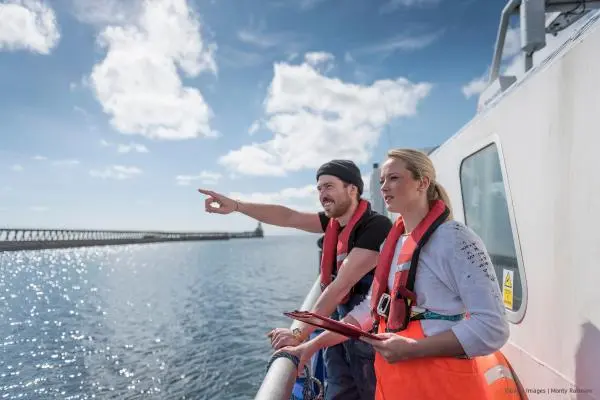
Unia Europejska
1 min czytania
OceanEye: placing the EU at the forefront of ocean observation
The EU is stepping up its role in ocean observation with OceanEye, a new initiative which aims to position Europe the global leader in ocean intelligence.
Без рейтингу0 коментарів1 хв
Czytaj artykuł→
Dane i statystyki
1 min czytania
HLTH_DPEH040 - "Dataset: updated structure"
Population by sex, age, disability status and household type
Без рейтингу0 коментарів1 хв
Czytaj artykuł→
Dane i statystyki
1 min czytania
HLTH_DPEH030 - "Dataset: updated structure"
Population by sex, age, disability status and income quintile
Без рейтингу0 коментарів1 хв
Czytaj artykuł→
Rozgrzewka
Czas rozruszać umysł: wybierz test
Dane i statystyki
1 min czytania
HLTH_DPEH020 - "Dataset: updated structure"
Population by sex, age, disability status and educational attainment level
Без рейтингу0 коментарів1 хв
Czytaj artykuł→
Dane i statystyki
1 min czytania
HLTH_DPEH010 - "Dataset: updated structure"
Population by sex, age, disability status and labour status
Без рейтингу0 коментарів1 хв
Czytaj artykuł→
Dane i statystyki
1 min czytania
HLTH_DPEH005 - "Dataset: updated structure"
Population by sex, age and disability status
Без рейтингу0 коментарів1 хв
Czytaj artykuł→
Dane i statystyki
1 min czytania
LFSQ_EGAN212D - "New dataset"
Employed persons by detailed economic activity (NACE Rev. 2.1 two-digit level) - quarterly data
Без рейтингу0 коментарів1 хв
Czytaj artykuł→